Research
Development and reproduction in higher organisms are precise biological processes established through the temporal and spatial coordination of diverse cell types. Our laboratory combines genome editing, genetically engineered mouse and rat models, pluripotent stem cells, and single-cell analysis to understand the molecular mechanisms supporting development and reproduction at the organismal level. We focus particularly on spermatogenesis, the testicular tissue environment that supports germ cells, genome-editing technologies for model animal production, and full-length gene-humanized mouse technologies for studying human disease and species differences.
Regulatory Mechanisms of Spermatogenesis
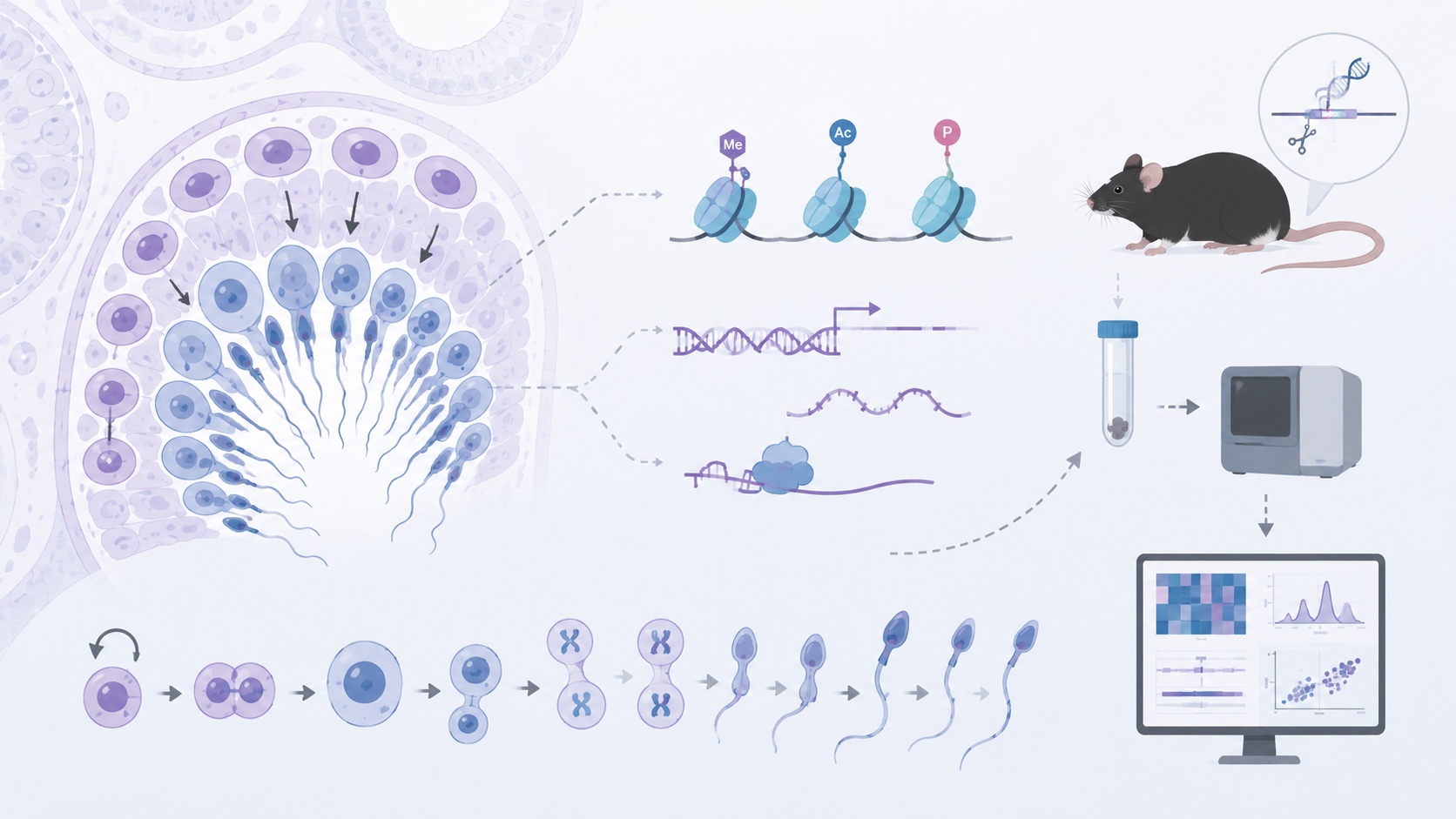
Germ cells are highly specialized cells that transmit genetic information to the next generation. Spermatogenesis is tightly regulated over a long time scale, from spermatogonial self-renewal and differentiation to meiosis and spermatid morphogenesis. Using genetically engineered mice and molecular biological approaches, we investigate the gene functions, epigenomic regulation, and RNA regulatory mechanisms that control spermatogenesis. Our previous work has shown that histone-modifying factors are involved in spermatogonial proliferation and the maintenance of spermatogenic activity during aging, and we continue to study the molecular basis that allows germ cells to sustain their function over time.
Functional Roles of Testicular Somatic Cells Supporting Spermatogenesis
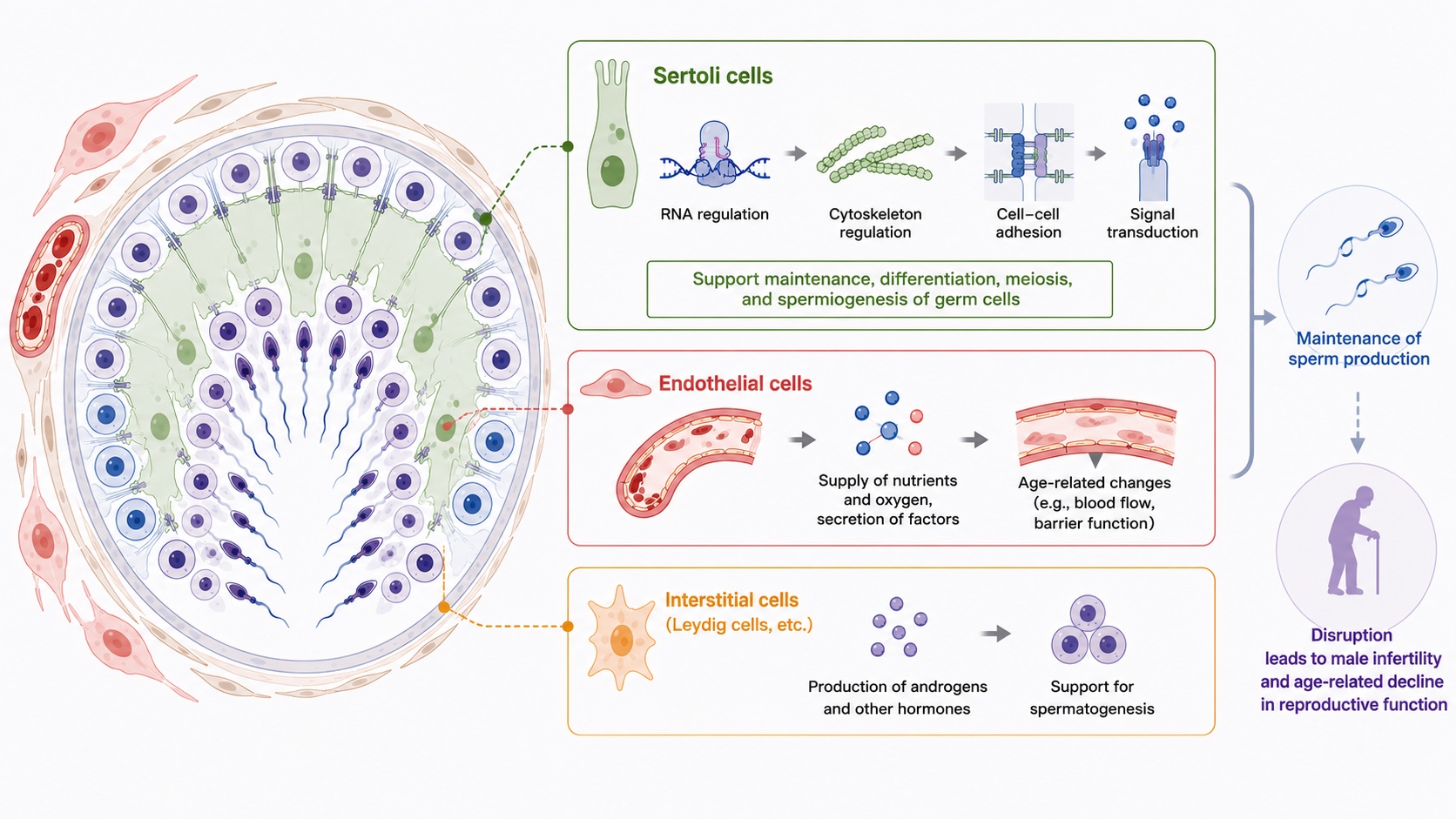
Spermatogenesis is not completed by germ cells alone. In the testis, somatic cells such as Sertoli cells, endothelial cells, and interstitial cells support germ cell maintenance, differentiation, meiosis, and morphogenesis. We study how testicular somatic cells regulate spermatogenesis and how disruption of this environment contributes to male infertility and age-related decline in reproductive function. We focus especially on RNA regulation, cytoskeletal control, cell adhesion, and signaling pathways in Sertoli cells. We have also found that age-related changes in testicular endothelial cells contribute to reduced spermatogenic activity, and we continue to investigate the tissue environment that supports reproductive function.
Advanced Genome Editing Technologies for Genetically Engineered Animals
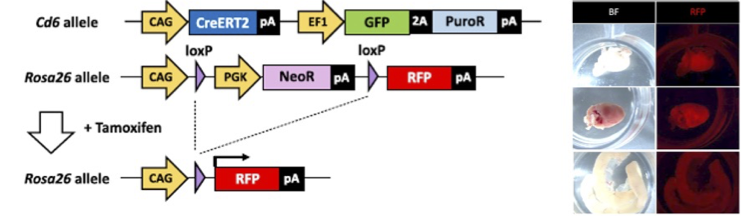
Genetically engineered animals are an essential research platform for testing gene function at the organismal level. Using mice as a model, we combine CRISPR/Cas9-based genome editing with embryonic stem cells to develop efficient technologies for knockouts, knock-ins, conditional mutagenesis, and large-scale genome engineering. We have reported methods that greatly improve gene-targeting efficiency in ES cells and enable highly efficient simultaneous modification of multiple genes. Building on these technologies, we develop precise model animals for developmental and reproductive biology, disease modeling, and gene function analysis. We also aim to apply advanced technologies established in mice to rats.
Understanding Human Disease and Species Differences Using Full-Length Gene-Humanized Mice
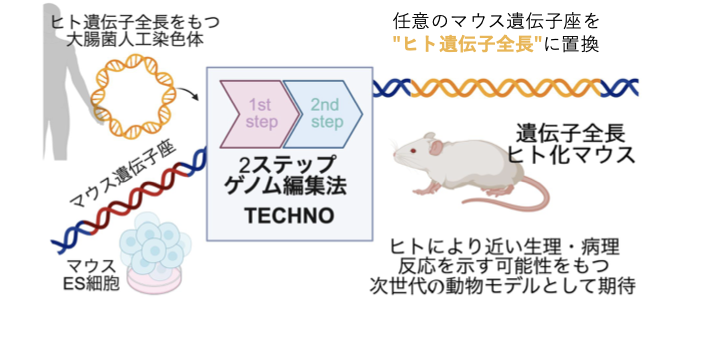
Understanding human disease requires analysis not only of protein-coding regions but also of full gene functions, including introns, untranslated regions, and regulatory sequences. Conventional mouse models cannot easily reproduce human-specific gene regulation, splicing, or non-coding region function at the organismal level. We develop full-length gene-humanized mouse technologies that reconstruct human genes, including surrounding regulatory regions, in the mouse genome. These models provide a new platform for analyzing human disease-associated variants and species differences in vivo.